


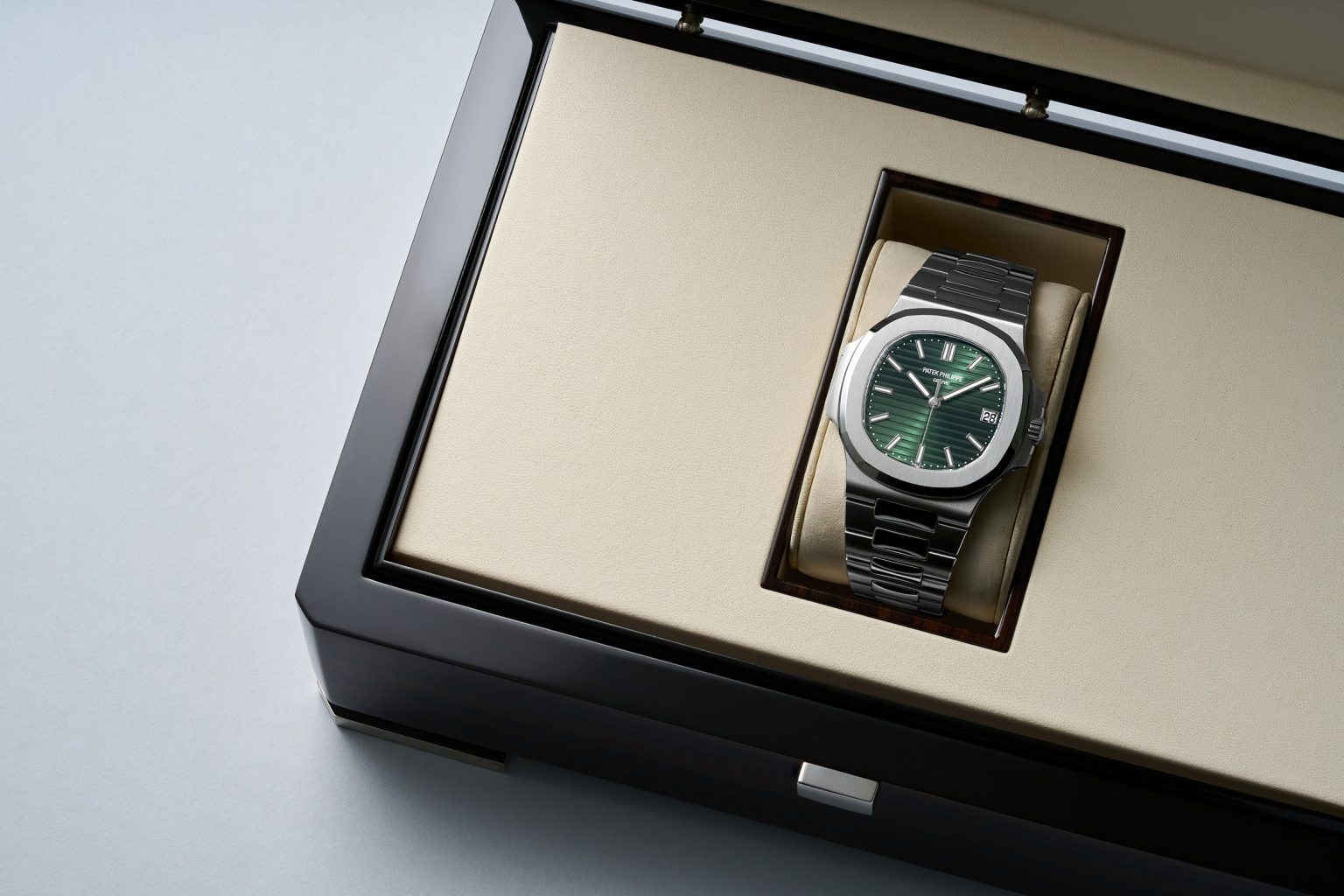
IWC Big Pilot’s Watch IW500901 – A Collateral Loan Case Study Example
The IWC Big Pilot’s Watch IW500901 combines a substantial stainless-steel case with an automatic movement designed to run for seven days. Its potential collateral value depends not simply on its recognisable appearance, but on the condition and correct configuration of the individual watch.
This case study is an illustrative scenario, not a record of a completed customer transaction. It explains the various steps and considerations as specialist pawnbroker might take if you want to use an IWC Big Pilot’s Watch as collateral for a loan.


Scenario: A homeowner considers funding essential repairs
A homeowner faces an urgent roof-repair bill before a fixed-term savings account becomes accessible. They own an IWC Big Pilot and want to explore whether a short-term loan could meet the immediate expense without permanently selling the watch.
The scenario assumes a funding requirement of approximately £2,500, with repayment intended from the savings account when it becomes available. The owner would need to consider the borrowing costs alongside the repair bill and confirm that the expected funds would cover both the advance and applicable charges.
First contact: identifying the watch and funding requirement
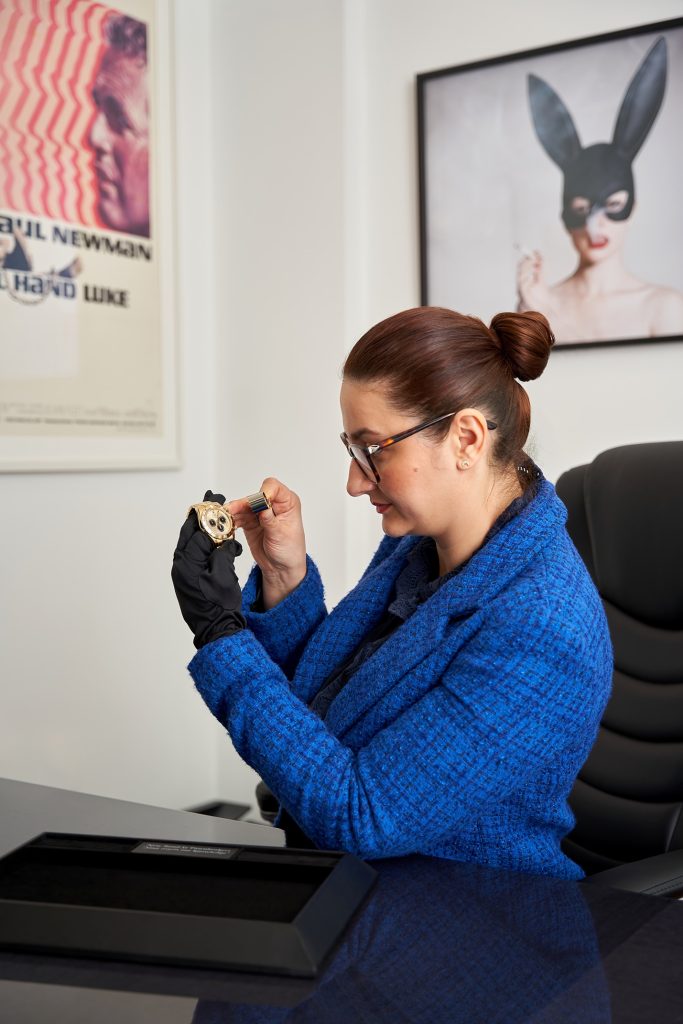
During the initial discussion, we would ask for the reference number, photographs and details of the watch’s condition. Images of the dial, crown, caseback, strap and clasp, together with any box, guarantee and service invoices, would help establish the likely model.
We would also ask whether the watch winds normally, how it performs during regular wear and whether the owner has noticed any change in timekeeping or power reserve. Those observations could inform the assessment. However, they would not replace physical examination.
An initial indication would remain provisional. The homeowner should not commit to an expenditure on the assumption that a particular loan amount is guaranteed.
Establishing the exact Big Pilot reference
This scenario concerns the IWC500901, a 46.2 mm stainless-steel Big Pilot with a black dial, date display, power-reserve indicator and automatic calibre 51111. IWC specifies a 168-hour power reserve, Pellaton automatic winding and a soft-iron inner case for protection against magnetic fields.
Big Pilot describes a collection, not one uniform asset. The IWC 500901 should be distinguished from earlier references, later seven-day models, the smaller Big Pilot 43 and ceramic or limited-edition executions. Their movements, dimensions, materials and market evidence can substantially differ.
That distinction also prevents technical errors. The IWC 500901 uses calibre 51111, highlighting how specifications associated with newer Big Pilots should not simply be transferred to it because their dials look similar.
Why the seven-day movement matters
The power-reserve display gives the owner useful information about stored energy, but a high reading would not, by itself, establish healthy winding, accurate timekeeping or the full stated running duration.
Our specialist would consider winding and setting behaviour, apparent running condition and the owner’s account of how the watch performs. Where necessary, further technical assessment could be required before a final collateral decision.
The Pellaton winding system is particularly relevant to this reference. Its condition and operation matter alongside the large movement’s overall service history. An attractive case and clean dial would not compensate automatically for an unresolved mechanical fault. Equally, and understandably, a short appointment would not be presented as a complete seven-day performance test.
Case, crown, strap and service records
The Big Pilot’s prominent crown is both a visual signature and a functional component. We would check its condition, engagement and setting action, alongside the case, crystal, dial, hands and clasp.
Its large case would be examined for impact marks, deep scratches and refinishing. The leather strap would be assessed for wear and suitability, while the clasp would be checked for correct configuration and secure operation. A replacement strap would not necessarily be problematic, but missing or incorrect hardware could affect completeness and presentation.
Service invoices would help explain the watch’s maintenance and any replacement parts. IWC’s stated water resistance would not establish that an older example remains water-resistant today. Instead, confirming that fact would require appropriate testing rather than an assumption based on the original specification.
Researching comparable Big Pilot prices
The valuation would then turn to completed sales of comparable IW500901 watches, rather than prices for newer Big Pilots, ceramic editions or precious-metal models. Each result would be reviewed against the watch’s condition, service history, strap, clasp and accompanying documents.
Recorded IW500901 auction results include £3,813 at Rago in October 2025 and £5,281 at Sotheby’s in December 2025. Earlier examples achieved £4,028 at Gralzee in November 2024 and £4,987 at Christie’s in May 2024. These provide useful same-reference benchmarks, although differences between individual watches and auction charges would need to be checked before drawing direct comparisons.
For this scenario, a provisional secondary-market assessment of £4,000 to £5,000 remains a reasonable working guide for a correct, well-maintained example. A final valuation would depend on physical inspection and suitable comparable evidence, with unresolved winding issues, servicing requirements or missing components potentially reducing the assessment.
Inspecting the watch in Mayfair
The homeowner would bring the Big Pilot and available documents to our Central London, Mayfair pawnshop. Our specialist would review the exterior, reference and identifying details, visible configuration and functional behaviour, then consider the findings alongside the service record and market research.
The IW500901 has a closed caseback, so its movement cannot be assessed through a display window. Any examination requiring access to the movement would need to be handled appropriately, rather than implied as part of a casual visual check.
The IWC assessment would bring together three questions:
- Is the watch suitable and correctly identified?
- What condition and service considerations affect it?
- What could a comparable example realistically achieve in the current market?
Illustrative collateral-loan assessment
Assume the owner presents the IW500901 with its box, guarantee, correct clasp and documented servicing. No satisfactory authentication or mechanical outcome is presumed.
If the individual assessment supported a realistic secondary-market value of £4,000 to £5,000, an illustrative lending proportion of 60% would produce a potential advance of £2,400 to £3,000. The percentage is an assumption for this scenario, not a confirmed offer or fixed lending policy.
The owner’s proposed £2,500 borrowing requirement would fall within that illustrative range, but would only be available if the actual appraisal and lending decision supported it. Service needs, condition, completeness and current saleability could change the outcome.
Reviewing the agreement and planning redemption
If a suitable offer were available, the owner would provide the required identification and supporting documentation, such as recent proof of address. They would then receive the relevant pre-contract information and proposed agreement, which clearly set out the terms of an FCA-regulated loan.
The scenario assumes a two-month funding requirement aligned with access to the savings account. The owner would need to check the release date, any withdrawal restrictions and whether the available funds would cover the total repayment.
Following completion of an agreement, the watch would be held as security in secure storage. On repayment in accordance with the terms, the homeowner could redeem and collect it.
Could your IWC support a similar loan?
This scenario shows why a Big Pilot assessment extends beyond its case size and seven-day indicator. The exact reference, movement condition, crown and winding behaviour, service history, completeness and current comparable evidence would all inform a potential offer.
Owners can contact New Bond Street Pawnbrokers for an initial indication and arrange a specialist assessment at 5 Blenheim Street, Mayfair, which is a short walk from New Bond Street Station.
As always, any loan on fine timepieces is subject to assessment, acceptance and the terms of the agreement. An initial indication or valuation does not guarantee that finance will be offered.

Featured in the Press
Our quality service, high standards, and innovative business practices have earned positive press coverage from a diverse set of media outlets such as The Times, The Telegraph, Time Out, Channel 4, The Spectator, and more.