


Alternative lenders for personal loans: how do your options compare?
There are several alternative lenders for personal loans, including non-bank loan providers, credit unions, community lenders, and pawn shops. They offer another form of borrowing: a short-term loan secured against a valuable item rather than an unsecured personal loan. The differences matter because they affect eligibility, repayment costs, and what you risk if you cannot repay. Each lender takes a different approach.


What are alternative lenders for personal loans?
Alternative lenders are borrowing providers outside traditional banks. However, they do not all offer the same product or assess applications in the same way.
Some of the more prominent options include:
- Non-bank personal loan providers: offer unsecured loans, usually repaid through monthly instalments.
- Credit unions: member-owned organisations that provide loans to eligible members.
- Community lenders: organisations that may lend to people who struggle to access mainstream credit.
- Pawnbrokers: lend against valuables like watches, paintings, fine jewellery, classic cars and others, which they hold as security until the loan and interest are repaid.
The term “alternative personal loan” does not describe a single standard product. Each provider offers different products that suit different personal circumstances, needs, and repayment schedules. Check whether the borrowing is secured or unsecured, how repayments work and the total amount payable before comparing offers

Non-bank personal loans vs bank loans: what is the difference?
A non-bank personal loan can work much like a bank loan: you receive a lump sum and repay it, with interest, over an agreed period. Personal loans are generally unsecured, with terms commonly lasting one to five years. Both banks and other personal loan providers assess your credit history when deciding whether to lend and what rate to offer.
The important comparison is between individual offers, not simply bank vs non-bank.
Check:
- The personalised APR, rather than just the advertised rate.
- Monthly repayments and total repayment.
- Arrangement fees and early-repayment terms.
- Whether the rate is fixed or variable.
A representative APR is not guaranteed for every successful applicant. Only 51% of approved applicants must receive that rate or better; others may pay more.
Applying for a non-bank personal loan requires a credit check and a broader assessment of whether you can repay the loan. These checks can affect approval and the interest rate you are offered.
Credit unions vs personal loan providers: which offers more flexibility?
Credit unions can offer smaller loans and different membership-based eligibility requirements. MoneyHelper describes credit union loans ranging from around £500 to £5,000 or more, with repayment periods commonly running from six months to five years. Most mainstream personal loans start at £1,000.
You must qualify for membership, usually through a shared connection such as where you live or work. Some credit unions also require you to save with them or remain a member for a period before borrowing; others allow an immediate loan application.
Credit union interest is capped at:
- 3% a month, equivalent to 42.6% APR, in England, Scotland and Wales.
- 1% a month, equivalent to 12.68% APR, in Northern Ireland.
These are maximum rates, not standard charges. Credit unions can be cheaper than high-cost borrowing, but they are not automatically cheaper than a bank or non-bank personal loan. Compare the actual offers available to you.
Credit union repayment periods are typically from six months to five years. They also have low interest rates, with a maximum rate of around 3%, as mentioned, in England, Scotland, and Wales.
Some credit unions require you to save with them for a period of time before applying for a loan, which can limit their usefulness as a quick source of credit.
Community lenders vs. credit unions: how do they compare?
Community Development Finance Institutions, known as CDFIs, may offer personal loans to people who struggle to obtain mainstream credit. Unlike credit unions, they are not member-owned savings and lending cooperatives. They also assess whether applicants can afford repayments.
MoneyHelper gives a typical community-loan range of £100–£1,500, making these lenders more relevant to smaller borrowing needs than substantial expenses. It also warns that their loans can cost more than credit union, bank or building society borrowing, and an administration fee may apply.
A community lender may therefore be worth investigating if other options are unavailable, but its community focus should not be mistaken for a guarantee of low-cost credit. Compare the APR, fees and total repayment carefully.
Pawn shops vs personal loans: how does borrowing against valuables work?
A pawn loan uses an item such as jewellery or a watch as security. The pawnbroker assesses the item, agrees on an advance, and holds it during the loan. With an unsecured personal loan, you do not leave a valuable with the lender.
The main differences are:
- Amount available: a pawn advance is a proportion of the item’s assessed value, not its full retail or replacement value.
- Repayment period: pawn agreements typically last six or seven months, whereas personal loans commonly run for one to five years.
- Payment structure: pawn loans usually require one repayment of the loan and interest, rather than monthly instalments.
- Asset risk: the pawnbroker can sell the pledged item if you do not repay under the agreement.
Pawnbroking is generally more expensive than a high-street personal loan. Its distinguishing feature is borrowing against an asset, rather than necessarily obtaining a lower interest rate.
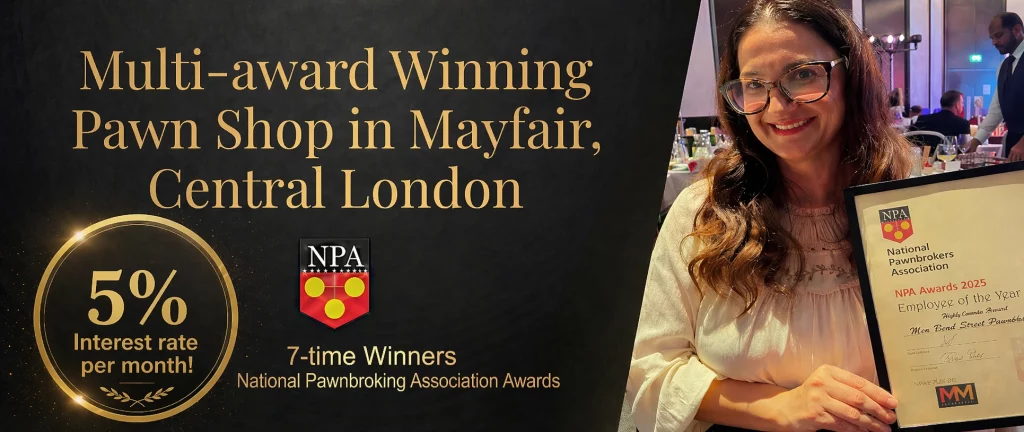
At New Bond Street Pawnbrokers, published terms specify 5% monthly interest and 67.3% APR, with a two-month minimum and a standard term of up to seven months. Its published example is a £2,500 loan over two months, with £250 interest and £2,750 repayable. There is no early-termination penalty, but the two-month minimum still matters when comparing costs.
In brief, pawnbroker loans are designed for short-term borrowing, which means they typically come with higher interest rates than high-street personal loans.
Can you get an alternative personal loan with a poor credit history?
Possibly, but using an alternative lender does not guarantee approval. Unsecured personal loan providers use your credit history to help decide whether to lend, how much to offer and what interest rate to charge.
Credit unions and community lenders may consider applicants who have been turned down elsewhere. However, membership conditions and affordability requirements still apply.
Pawn loans work differently because the pledged asset secures the borrowing. MoneyHelper notes that pawnbrokers do not need to carry out credit checks, but this should not be confused with an application involving no checks at all. Confirm the lender’s requirements before proceeding. New Bond Street Pawnbrokers, for example, requires new clients to provide photographic identification and proof of current address no older than three months.
Pawn loans present a different opportunity. Because the loan is secured against an item you own, the lender’s decision rests mainly on the asset’s value, rather than on a credit check.
For example, suppose you bring in an Omega watch valued at £10,000 to New Bond Street Pawnbrokers. At a 70% loan-to-value ratio, the advance would be £7,000 at a fixed 5% monthly interest rate. That works out to an interest payment of £350 per month for each month of your two- to seven-month loan, paid as a lump sum alongside the principal at the end of the loan.
For unsecured borrowing, use a soft-search eligibility checker where available before making a full application. It can indicate your chances of acceptance without affecting your credit score.
How should you compare alternative lenders for personal loans?
Comparing alternative lenders for personal loans means understanding interest rates, loan periods, and thinking about what you can realistically manage.
Here is a useful checklist to run before accepting an offer:
- Total cost: calculate the interest and fees required to repay the loan.
- Rates: Compare both monthly and annual interest rates.
- Repayment schedule: can you manage monthly repayments, or is a lump sum a better fit?
- Early settlement: does the provider charge a fee if you settle your loan early?
- Security: are you happy to lose short-term possession of your asset while it secures your loan?
- Eligibility: can you check how likely you are to be approved before submitting a full application?
- Affordability: If you are already struggling to pay bills or existing debts, seek free debt advice before taking on further borrowing.
Choosing between lenders
Other Alternative Lending FAQs
Career development loan alternatives
Career development loan alternatives are useful when courses aren’t covered by an employer or eligible for government-backed assistance. Here are some alternatives that can help cover your fees.
Alternative student loan options
Alternative student loans offer different ways to pay for study beyond securing a government loan via Student Finance England. The main options include private lenders, university bursaries, family help, and short-term collateral lending.
Alternative loan lenders
Comparing alternative loan lenders is about finding the right fit for how much you need, how quickly you need it and whether you can offer an asset as security. The firms below are named only as examples of each lender…
Alternative business loans
Alternative business loans can help fund stock, equipment and cash-flow gaps. Options range from borrowing against valuables to financing unpaid invoices. The right choice depends on what you need, how you will repay and what you are prepared to put…
Alternative loans
Alternative loans offer borrowers different options from traditional bank or building society loans. Understanding costs, eligibility requirements, and repayment obligations is essential before deciding which one is right for you.Constantin Singureanu.

Featured in the Press
Our quality service, high standards, and innovative business practices have earned positive press coverage from a diverse set of media outlets such as The Times, The Telegraph, Time Out, Channel 4, The Spectator, and more.