

van Goyen Old Master Painting – A Collateral Loan Case Study Example
Assessing an Old Master painting is a complex process. While recognising a signature is a good start, a luxury pawnbroker needs more assurance before lending against a painting. Some factors a specialist must consider include attribution evidence, how much of the original painting remains visible, and whether auction comparisons are a true fit.
This hypothetical case study follows an owner considering a five-month loan against a small Dutch landscape presented as a Jan van Goyen. It describes a possible assessment that explains how the painting’s attribution, condition, supporting records and market evidence would all come to bear when a customer wants to use a Jan van Goyen Old Master painting as collateral for a loan.


Scenario: Accessibility work before an inheritance distribution
In this illustrative scenario, a homeowner needs £12,000 towards adapting a ground-floor bathroom for a parent with reduced mobility. They can cover the remaining project costs from savings, but an anticipated inheritance distribution is not expected for another four months. The owner considers a five-month loan against a family-held Dutch landscape rather than selling it.
For this example, the painting is assumed to be a small seventeenth-century oil on panel depicting cattle in a dune landscape, with distant sailing vessels. It is presented as a work by Jan van Goyen. The owner retains an earlier purchase invoice, catalogue description and conservation report. However, the painting does not have an uninterrupted ownership history stretching back to the artist’s lifetime.
We request clear photos to evaluate the piece before setting up a physical inspection.
Identifying the painting and its proposed attribution
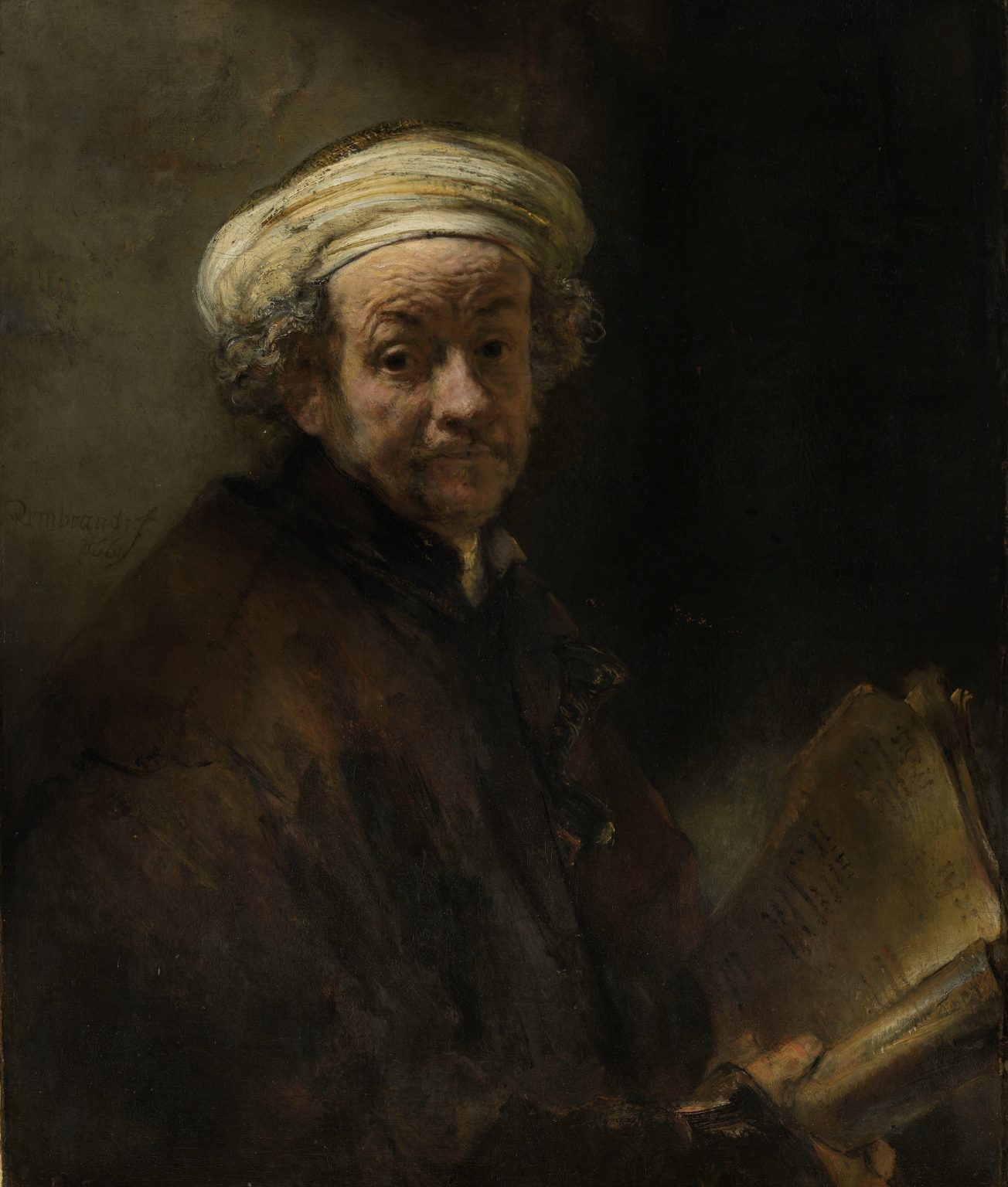
Jan van Goyen was born in Leiden in 1596. After training with Esaias van de Velde, he became one of the pioneers of Dutch tonal landscape painting. The Rijksmuseum describes his dune and river landscapes of the early 17th century as predominantly brown and green. That background gives the specialist a basis for examining the picture’s composition, palette and handling.
The appraisal would record the work’s medium, support, dimensions, subject and visible inscriptions. The physical painting would then be matched to the supplied invoice and catalogue entry, where we would check photographs, measurements and any identifying labels.
The wording of the attribution would receive particular attention. A painting catalogued under Van Goyen’s name would not automatically be interchangeable with one described as attributed to, circle of or follower of.
Why attribution requires more than a signature
Like many Old Masters, Van Goyen had followers and imitators. Indeed, many artists worked in related styles, which makes stylistic resemblance a mere starting point for research.
A specialist would consider the relationship between the painting’s composition, brushwork, materials, apparent period and published records. Any signature or monogram would be examined in that wider context.
An old auction attribution would be important evidence, but would not remove the need to review subsequent scholarship or unresolved questions. Equally, a conservation report could describe the materials and condition without necessarily establishing authorship.
Where the available evidence is insufficient, further opinion from an appropriate Fine Art specialist could be required.
Panel condition, restoration and ownership records
Next, we could assess the panel and paint surface. Our specialist would review the support for visible splits, distortion, joins and previous interventions, alongside the paint for lifting, losses, abrasion and retouching.
Restoration of these pieces is extremely common. What we would look at is the extent and effect on the painting. The owner’s report would be checked for its date, scope and treatment findings.
Provenance would be reviewed through invoices, catalogue entries, labels and other records. Gaps would be identified rather than filled with assumptions. We would also require the owner to establish their entitlement to pledge the painting.
Researching comparable Jan van Goyen auction prices
Bonhams sold A dune landscape with cattle grazing in the foreground, sailing vessels in the distance for £20,480 in September 2023. The work was catalogued under Jan van Goyen’s name and provides a completed-sale benchmark with a closely related subject.
This is the principal comparison for the hypothetical painting. However, it is not evidence that every small Van Goyen landscape is worth approximately £20,000.
The specialist would review the full lot record and condition information, comparing support, dimensions, composition, preservation, attribution and supporting literature. The shared presence of cattle and distant boats would not, by itself, establish equivalent quality or value.
For the calculation below, £20,000 is used as a provisional secondary-market assessment assumption. It would require a supported attribution and a sufficiently favourable comparison with the Bonhams painting.
Specialist assessment and handling arrangements
Before the owner moves the painting, suitable examination and transport arrangements would be discussed. A panel painting should not be brought to an appointment without considering its condition and handling requirements. In some situations, we might recommend assessment at a specialist fine-art facility.
The examination would bring together the front, reverse, panel construction, paint surface, marks, labels and documents. Any need for additional conservation assessment or technical investigation would be identified before a lending decision.
Scientific examination, where appropriate, would address specific questions about materials or condition. The specialist would then determine which auction examples remain relevant.
Illustrative collateral-loan assessment
If physical examination, attribution research and suitable market evidence support an assessment of £20,000, an illustrative lending proportion of 60% would produce a potential advance of £12,000, meeting the owner’s requirement.
The valuation and proportion are hypothetical. In most circumstances, the loan-to-value ratio is governed by the painting’s attribution, preservation, title and marketability being satisfactory for lending consideration.
In this scenario, a 60% lending proportion could be justified by Old Masters’ recent market performance. In 2024, the wider Old Masters auction sector fell 25% in value to a 15-year low, despite the number of lots sold increasing 7%. However, the following year saw more high-value transactions that translated into a 30% rebound, though results remained selective.
Starting an Old Masters assessment
Appraising an Old Master for a collateral loan is different from most other assets. Attribution, medium, and dimension are important factors. However, provenance is the true driver, making early sale catalogues, ownership records and conservation reports a vital part of the process. While condition is always something we consider, some wear and restoration is typical of these aged pieces.
Contact New Bond Street Pawnbrokers to discuss an assessment at 5 Blenheim Street, Mayfair, or arrangements for a painting that requires specialist handling.
Any offer would remain conditional on assessment, acceptance and the agreement’s terms. An attribution in an earlier auction catalogue or a result achieved by a comparable painting may inform the enquiry, but neither establishes the attribution, value or borrowing potential of the work being presented.
Featured in the Press
Our quality service, high standards, and innovative business practices have earned positive press coverage from a diverse set of media outlets such as The Times, The Telegraph, Time Out, Channel 4, The Spectator, and more.